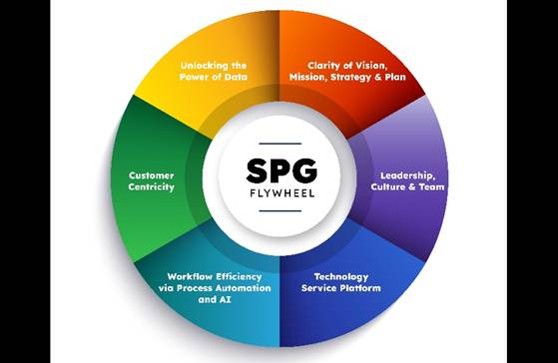
We finished up Sapphire Transform 2026 in Boulder just over a week ago. One of the reasons CEO’s attended was to take a step back and use a proven approach to determine what was needed next for their companies to deliver growth and a high performing culture. One aspect of the doctrine we shared with the participants is the Sustainable Growth Flywheel. Each component of the flywheel requires dynamic attention as a company improves and changes.
As new visions emerged and necessary change was identified, inertia or BAU became a topic of discussion as a key blocker to progress. BAU can quite literally stop your company from becoming fit for growth or from taking advantage of a growth opportunity where the window for taking advantages of opportunity is opening and closing at an unprecedented pace.
Because the thing is… BAU will use all your time. It shows up as current customer requests, board reports, crisis, excel spreadsheets, acceptance of the current ineffective practice, tolerating “flat tires” or poor team dynamics etc… While BAU activities seem critical or inescapable, they don’t move the company forward to the future you want and represent inertia that will steal your company’s future.
Think of your senior team’s work in concentric circles; BAU, Change Work and Future State work.
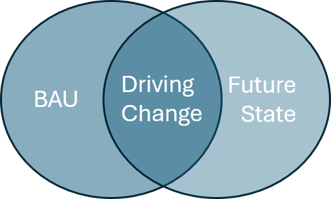
In each component future of your business ask yourself or your team , what actions are you taking that are BAU, that Drive Change or Define and Align the Team around the future you must create to thrive? Definition and alignment on the future state and driving change must take priority; you then can manage BAU without it taking priority over the other work. This is what we mean when we say “create the future by leading from the future.” It remains a difficult mindset for leaders, despite various descriptions of the concept presented across history. Immediate pressures, are all too easy to succumb too without proper decision and execution discipline.
When I was leading a company developing a spreader product years ago, we had difficulty getting the product off the ground and out of what we called the inception process because we were maintaining and improving our existing product, responding to existing customer feature requests and fighting fires around network performance and stability. BUT, as the senior leaders, we knew that being a serious order execution product was our future; and to do that we needed a high-performance spreader. We staffed the spreader effort first and then made hard decisions around what projects to stop and executed the GTM as though release was a certainty. We put our trust in the people accountable for taking care of our current customers that they would keep the ship afloat and make calls within the resources they still had without us second guessing them.
Looking back, we were addressing our technology, customer centricity, clarity of vision components directly but the rest of the fly-wheel indirectly. The key was to have the conviction to make the decision to drive the change and to trust our team to deliver and to spend time on activities that would enable the change away from BAU work.

